The Mission-Driven Analyst  /  Notre Dame MSBA  /  first Ugandan Moreau Scholar

Anyone can read a dashboard.
Few can make it human.

I make data human for people who care more about mission than metrics. The translator between the spreadsheet and the room where the decision gets made.

Scroll ↓

Notre Dame MSBA/ Marketing & data analytics for mission-driven organizations/ Data storytelling/ Photography published in the Austin American-Statesman

Feeling like you are making a difference and actually making a difference are not the same thing. Passion is fuel. Measurement is the steering wheel.

If you genuinely care about a mission, you owe it the honesty of asking whether the work is working. I find the one number that tells you the truth, then say it plainly enough that a leader, a board, or a donor acts on it. Comfortable reports help no one. Honest ones move missions.

Why me, not the dashboard

Three things a dashboard will never do for you

I translate between worlds. I find the one thing that matters. And I learned it where the budget was small and the stakes were real.

I build the bridge. I sit between the people who measure things and the people who care about things, the data team and the leadership, the numbers and the mission. That translation is the work, and it is the part no tool can do for you.

I find the signal. Not forty metrics. The one that actually moves your mission, said plainly enough that a donor, a board, or a program director acts on it.

I earned the lens the hard way. Born in Jinja, Uganda. The first Ugandan Moreau Scholar. A Notre Dame MSBA reached on a road most people never have to walk. So I will never hand you advice that needs a budget you do not have.

The craft runs on SQL, Python, GA4, Looker Studio, Tableau, HubSpot, and Sprout Social. You never have to see any of it.

How I work

The rigor under the story

01
Framework

Metric design

I define the few numbers that actually map to the mission, before anyone builds a dashboard.

02
Who

Segmentation

I split the audience into groups that behave differently, so effort and spend follow the people who matter.

03
Stickiness

Cohort & retention

I track whether the people you reach come back. Acquisition without retention is a leak, not a win.

04
Cause

Attribution

I trace which channels produce lasting supporters, not just first clicks.

05
Proof

Experimentation

I test changes against a control, so a call rests on evidence, not opinion.

06
Trust

Data QA & governance

I make the data trustworthy before anyone bets on it: clean, deduplicated, and defined the same way everywhere.

Selected analysis

Proof, not promises

Featured analysis  /  Network science

I measured whether I actually bridge worlds. I do.

I treated my own professional network of 1,606 people as a dataset and ran network science on it. The math found eleven distinct worlds, analytics, tech, two universities, faith and mission, East Africa, and showed they connect mostly through one point. The position I claim is not a slogan; it is the measurable shape of the network.

Network science · Python · NetworkX · Louvain · Machine learning
Read the full case study →
YOU
Forecasting

Energy demand, forecast to 2.7% error

Over three million consumption records and a full bake-off of models in R: ARIMA, neural networks, and ensembles. The ensemble beat every standalone model at a MAPE near 2.66%, accurate enough to pre-position supply before winter peaks.

Time series · ARIMA · Neural nets · R

Read the full case study →
Field research

Owning a phone did not predict use. The device did.

In rural Uganda, fifty surveys and ten community-leader interviews analyzed in SPSS. Phone ownership did not predict social media use; phone type did, decisively (Chi-square, p < .001). Cost was the top barrier. Handing out phones alone will not close the divide.

Mixed methods · SPSS · Chi-square

Read the full case study →
Behavioral analytics

Emotion moved donors. Flattery did not.

For a youth-serving nonprofit, donor response measured and modeled with factor analysis, ANOVA, and regression. Emotional, impact-led posts won; promises and ingratiation showed no significant effect. The recommendation followed the data, not the hope.

Survey design · Factor analysis · Regression

Read the full case study →
The other half

The same eye, behind a camera

The instinct that finds the one number that matters is the same one that finds the one frame. Portraits, events, sport, and film. This is only a glimpse; the full body of work lives inside.

Every two weeks

The Mission-Driven Analyst

Short essays on turning numbers into decisions, for anyone who works with data in service of a mission.

Step inside the newsletter →
About
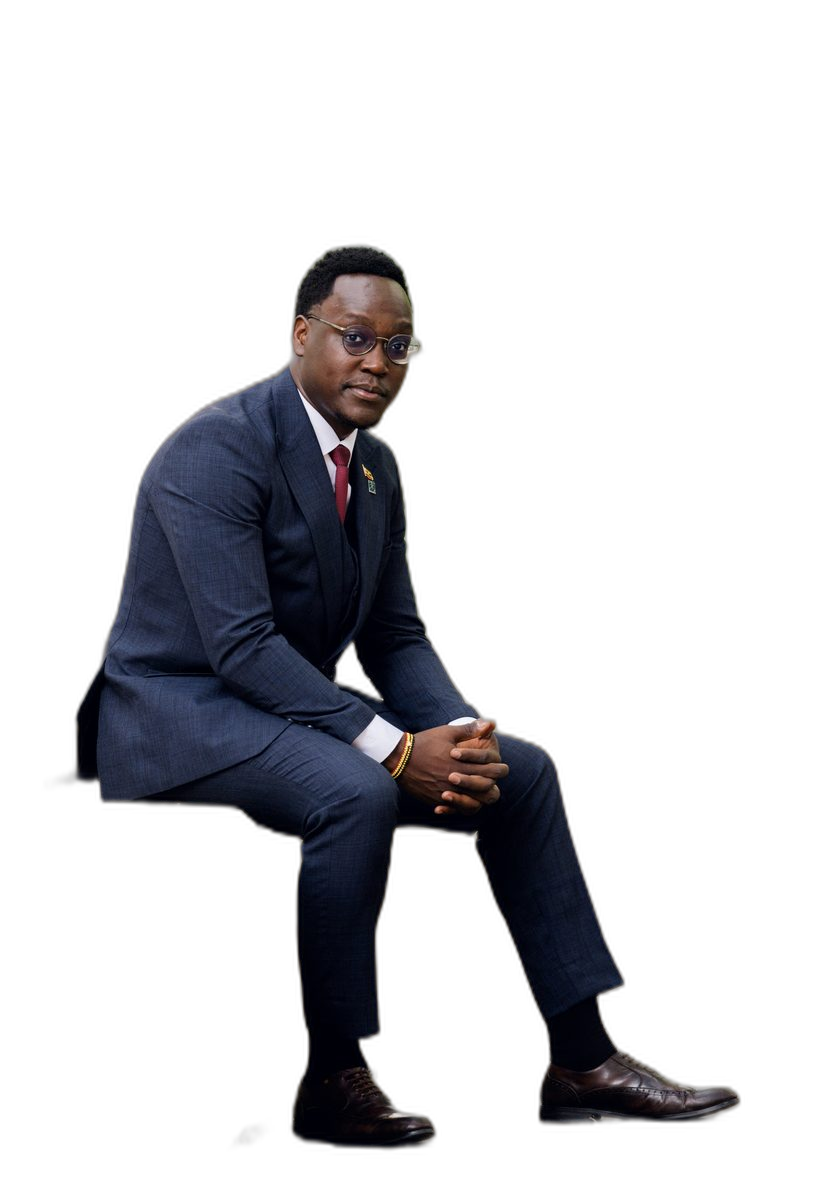
Emmanuel Epau, photographed at St. Edward's University
I learned to translate before I learned to analyze. It turned out to be the whole job.

Before I ever cleaned a dataset, I was learning to read a room I did not belong to. I grew up in Jinja, Uganda, left with a suitcase and a scholarship, and bought my first college textbook at twenty-two. I think in five languages, and they do not all say the same thing, so translating became second nature long before it became my profession. Between cultures. Between the people who measure and the people who decide. Between what is said and what is actually meant.

At the University of Notre Dame I earned a Master of Science in Business Analytics and became the first Ugandan Moreau Scholar. The degree did not give me the instinct. It sharpened the one I already had. Find the one true thing in the noise, and carry it to the person who needs it, in a language they can feel.

Now I do that for teams who serve a mission, not a metric. I turn the numbers that pile up into a decision a leader, a donor, or a volunteer will actually act on. The data is never the point. The people on the other side of it are.

The photographs and the films are the same instinct with a different tool. Find the one thing that is true, and make it impossible for the right person to miss.
The Mission-Driven Analyst. New essays every two weeks. Subscribe →